
Meal prep helps weight loss for one unglamorous reason: it removes decisions. Every prepped meal is a choice already made — calm, on Sunday — instead of a negotiation with yourself at 6:47 PM, starving, surrounded by takeout menus. You need about 2–3 hours a week and a system simple enough to survive your actual life.
Key takeaways
- Meal prep works through decision removal and portion pre-commitment — not discipline. The healthy choice becomes the easy choice because it’s already made.
- The beginner system: 2 proteins + 1 grain + 2 vegetables, cooked in one 2–3 hour session, assembled into mix-and-match bowls through the week.
- Eat refrigerated prepped food within 3–4 days; freeze the rest. Cool food quickly and reheat until steaming.
- Prep is a convenience tool, not a moral system — no “clean eating” rules, no punishment portions, no guilt about the meals you don’t prep.
- Start with just lunches or just dinners. Partial prep you sustain beats total prep you abandon.

Why meal prep works (it’s not willpower)
Weight-loss advice loves to talk about willpower as if it’s a character trait. It’s not — it’s a depleting resource, and food decisions are one of its biggest drains. Researchers estimate adults make 200+ food-related decisions daily. Each one is a small negotiation, and negotiations get worse as the day goes on: the person who chose oatmeal at 7 AM is not the same decision-maker staring into the fridge at 8 PM.
Meal prep attacks this structurally, three ways:
- Decision batching. You make five days of lunch decisions in one calm session instead of five stressed ones. The Sunday version of you is simply a better nutritionist than the weeknight version.
- Environment design. When the fridge contains ready-to-eat balanced meals, the path of least resistance is the healthy choice. Willpower is for resisting the environment; prep changes the environment so there’s less to resist.
- Portion pre-commitment. A container holds what it holds. You can’t “accidentally” serve yourself a second helping from a pot that’s already portioned — which quietly enforces a calorie deficit without any in-the-moment math.
None of this requires eating the same joyless chicken-and-broccoli five days straight. That’s where beginners go wrong — they prep like they’re being punished, last nine days, and conclude “meal prep doesn’t work for me.” The system below is designed to avoid exactly that.
The minimum viable system
Forget the elaborate grids. The beginner system has three components, cooked in one session:
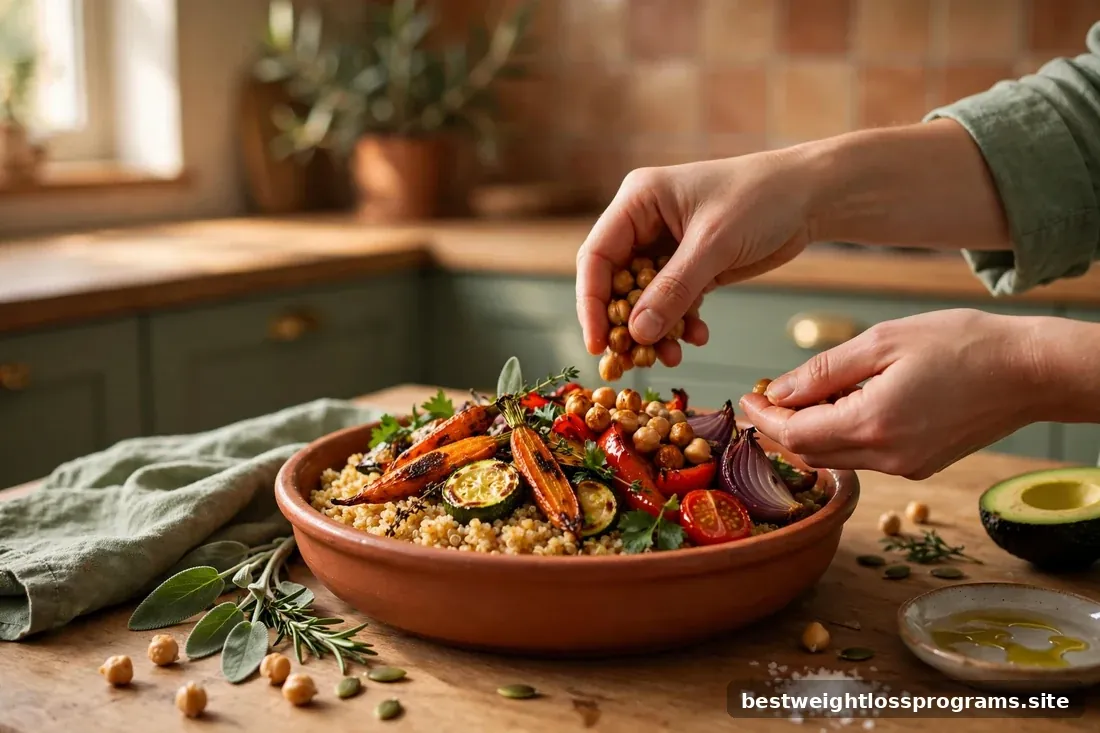
2 proteins. Pick two you actually like: e.g., sheet-pan chicken thighs + a pot of lentils. Or baked salmon + black beans. Or turkey meatballs + chickpeas. Cook them simply — salt, pepper, olive oil, maybe one spice blend you enjoy. (For protein targets that make these meals do weight-loss work, see our protein guide.)
1 grain (or starchy base). Brown rice, quinoa, farro, or even just good bread for the week. Cook a big pot; it reheats all week.
2 vegetables. One roasted tray (broccoli, cauliflower, sweet potato, peppers — whatever’s cheap and in season) and one fresh (bagged salad, cucumbers, cherry tomatoes). Roasting is the beginner’s best friend: chop, oil, salt, 425°F, done.
That’s the whole system. Through the week, you assemble, not cook: grain + protein + veg + a sauce. Monday’s bowl is chicken + rice + roasted broccoli with peanut sauce; Tuesday’s is lentils + rice + salad with vinaigrette. Same components, different meals — variety without extra work.
Sauces are the cheat code. Two homemade-or-bottled sauces (a vinaigrette, a peanut or tahini sauce, salsa, pesto) transform identical components into different-tasting meals. Bland prep is a choice, and sauces are how you un-choose it.
Time budget: 2–3 hours, including cleanup. Put on a podcast. The oven and stovetop do parallel work while you chop the next thing.
A beginner week, step by step
Sunday session (about 2.5 hours):
- 0:00 — Preheat oven to 425°F. Put rice/grain on the stove. Preheat a second pot for lentils/beans.
- 0:10 — Chop vegetables for roasting; get two sheet pans in the oven. Season chicken and get it on a third pan (or cook it after the veg).
- 0:15 — While everything roasts: wash salad greens, make one vinaigrette, portion snacks (yogurt cups, fruit, nuts into grab-bags).
- 0:45 — Flip pans. Start cleanup — wash as you go and the “dishes mountain” never forms.
- 1:15 — Everything comes out. Rest meat 10 minutes, then slice.
- 1:30 — Portion into containers: 4–5 lunches assembled, remaining components stored separately for dinners.
- 2:00 — Cool everything before sealing (spread on sheet pans to cool faster), refrigerate, done.
Monday–Friday: grab, reheat, eat. Dinners = 10-minute assemblies from the component containers. If you get bored by Thursday, that’s what the freezer stash and the sauce shelf are for — or just eat out once. The system survives imperfection; that’s the point.
Start smaller if this feels like a lot. Prepping only lunches is a complete strategy. Prepping only the components (proteins and grains, no assembled containers) is also complete. The minimum effective dose is whatever you’ll repeat next Sunday.
Food safety basics
Prep only works if the food stays safe. The rules are simple and non-negotiable — and they come straight from the USDA’s leftover guidance:
- The 3–4 day rule. Eat refrigerated cooked meals within 3–4 days (the USDA says use or freeze leftovers within four days). Prepping Sunday? Plan to finish (or freeze) by Wednesday/Thursday. When in doubt, freeze on day 3 — frozen meals keep for months.
- Cool it fast. Don’t leave cooked food on the counter for hours. Get it into the fridge within 2 hours of cooking (spread on sheet pans to cool quicker, then container and refrigerate).
- Reheat to 165°F. Reheated leftovers should reach 165°F (use a thermometer) — microwaves have cold spots, so stir halfway and check in several places.
- One sniff test caveat. Spoilage bacteria usually announce themselves, but pathogenic bacteria often don’t — “it smells fine” is not a safety test. When in doubt, throw it out. Rice deserves special mention: cool it quickly and refrigerate promptly, as it can harbor bacteria that reheating won’t fix.
- Label with the date. A piece of tape and a marker. Future-you will not remember which container is from Sunday and which is from last Sunday.
Meal prep without diet culture
Meal prep content is drenched in diet culture — “clean eating,” punishment portions, moral language about food. Let’s be explicit about what this guide is and isn’t:
- This is a convenience system, not a purity system. There’s no forbidden food list. Prepping balanced lunches doesn’t obligate you to earn, deserve, or apologize for any other food.
- Small containers aren’t virtue. Portioning is a calorie-awareness tool, not a moral statement. A prepped meal and a restaurant meal are both just food.
- Skipping a week isn’t failure. Travel, illness, chaos — life interrupts systems. The system resumes next Sunday without penance. All-or-nothing thinking is what actually kills consistency.
- Prep what you like. If you hate kale, don’t prep kale. The “healthiest” prepped meal is the one you’ll actually eat on Thursday. Palatability is a feature, not a compromise.
- Your body, your portions. Templates are starting points. Hunger, activity, and medical needs vary — adjust quantities to your life, not to an influencer’s container sizes.
The goal is a fridge that makes your week easier. If prepping starts feeling like a second job you resent, simplify further — even prepping one component (a protein, a grain) meaningfully reduces weeknight decisions.
The time and money math
Skeptics ask whether prep is worth the Sunday hours. Run it honestly:
- Time: 2–3 hours prepping replaces ~30–45 minutes of daily cooking, deciding, and cleaning — roughly 3.5–5 hours across the week. You’re not spending time; you’re moving it to a convenient slot and getting change back.
- Money: Batch-cooked staples (grains, beans, seasonal veg, sale proteins) cost a fraction of takeout or delivery per meal. The grocery list for a week of prepped lunches typically runs less than two delivered dinners — and the CDC’s healthy eating guidance (vegetables, whole grains, lean protein, limited added sugars) maps perfectly onto cheap staples.
- Waste: Planned groceries get eaten; impulse groceries rot. Preppers consistently waste less food, which is money back in a different pocket.
The real cost is the learning curve — the first two sessions are slow and slightly chaotic. Session four feels automatic. That’s the entire difficulty curve.
Frequently asked questions
How long does meal prep take for a beginner?
Plan 2–3 hours for a full week of lunches plus dinner components the first few times. It drops toward 90 minutes as you learn your rhythm. Start with just lunches (~60–90 minutes) if the full session feels daunting.
Do I have to eat the same thing every day?
No — that’s the misery version. The component system (2 proteins + 1 grain + 2 veg + sauces) produces different-tasting bowls from the same batch. If you still get bored, prep for 3–4 days instead of 5 and cook fresh later in the week.
What containers should I buy?
Glass containers with locking lids: they reheat evenly, don’t stain, and last years. Start with 6–8 in two sizes. You don’t need a matched set — you need containers you’ll actually wash and reuse.
Can I meal prep if I don’t like cooking?
Yes — that’s arguably who it’s for. The system minimizes cooking skill (sheet-pan roasting, one-pot grains) and concentrates the chore into one session. Rotisserie chicken, pre-cooked grains, frozen vegetables, and bagged salads are all legitimate prep shortcuts.
Does meal prep actually help with weight loss specifically?
It helps with the behaviors that drive weight loss: consistent balanced meals, controlled portions, fewer impulse decisions. Combined with a moderate calorie deficit and daily habits that support it, it’s one of the highest-leverage routines you can build.
The bottom line
Meal prep isn’t a diet — it’s infrastructure. Two proteins, one grain, two vegetables, a couple of sauces, 2–3 hours on Sunday, and your weeknight self never has to negotiate dinner again. Start with lunches only, keep the food you actually like, respect the 3–4 day safety rule, and let the system be boring. Boring is what makes it last.
This is general information, not medical advice — talk to your doctor before starting any weight loss program.